Online Lyre Course
More Links
- Accordion Course
- Piano Course
- Persian Tang Course
- Harp Course
- Lyre Course
- Harmonica Course
- Saxophone Course
- Flute Course
- Lakota Fluet Course
- Cajon Course
- Clarinet Course
- Double Bass Course
- Guitar Course
- Electric Guitar Course
- Melodica Course
- Harmonica Course
- Handpan Course
- Hangderam Course
- Violin Alto Course
- Classic Violin Course
- Cello Course
- Ukulele Course
- Accordion
- Cajon
- Cello
- Clarinet
- Classic Violin
- Double Bass
- Electric Guitar
- Flute
- Guitar
- Handpan
- Hangderam
- Harmonica
- Harmonica
- Harp
- Lakota Fluet
- Lyre
- Melodica
- Persian Tang
- Piano
- Saxophone
- Ukulele
- Violin Alto
- Hearing training
- Iranian Singing
- Persian Avaz
- Persian Chore
- Persian Foley
- Persian Pop Singing
- Persian Singing
remove filters

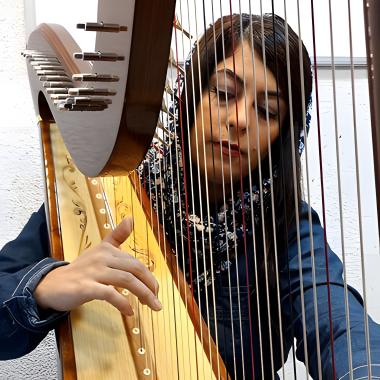
Fatemeh Haghparast - Lyre
Tuition : 1,800,000 tomanStudents Videos
Lyre
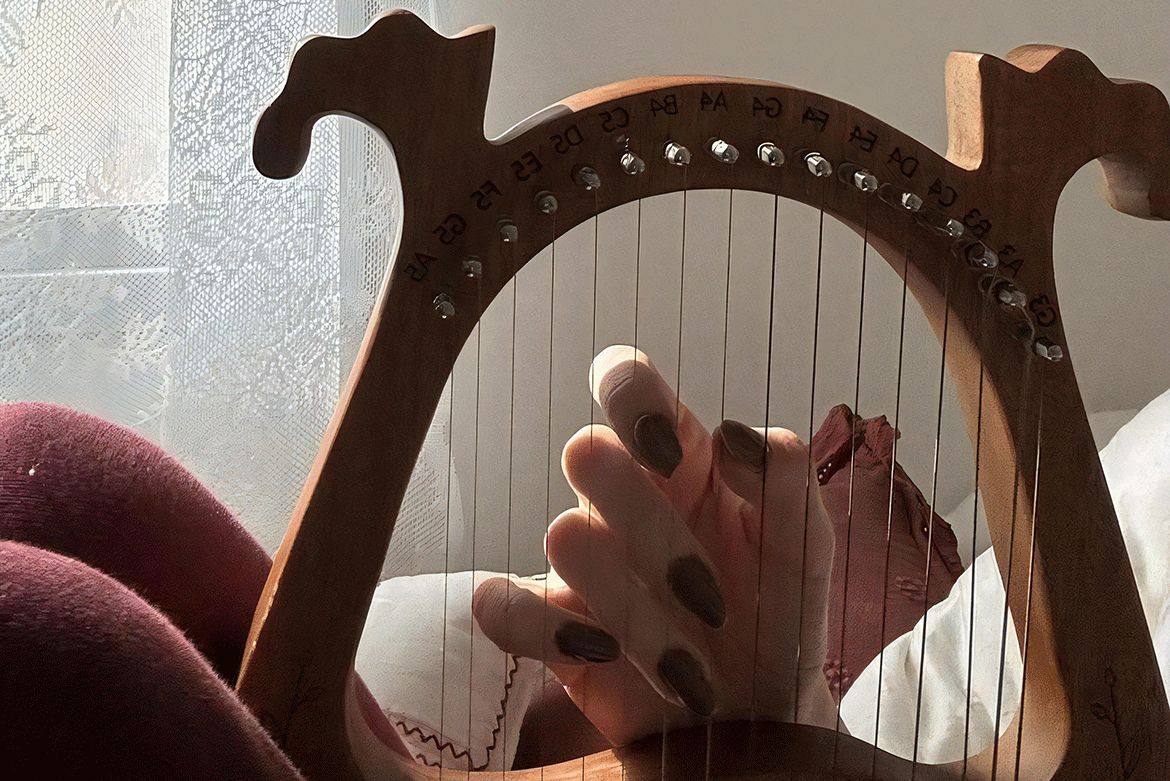
Online Roman Harp Lessons – Discover an Ancient Sound
The sound of an ancient string instrument can feel completely different from learning a modern instrument. But if you've ever picked up a Roman harp and wondered where to put your hands, how to approach the strings, or what to play first, you're not alone.The instrument may look simple, but developing a comfortable hand position, clean plucking, and a sense of rhythm takes practice.
Our online Roman harp lessons give you a practical way to explore the instrument, starting with the basics and gradually moving toward real music.
Start Playing Roman Harp Without Feeling Lost
If you're wondering how to play Roman harp for beginners, the first step is getting comfortable with the instrument.In our Roman harp course, you'll learn how to hold the instrument, position your hands, identify the strings, and produce clear notes. You'll gradually combine individual notes into simple patterns and melodies.
Instead of trying to figure everything out from random tutorials, you'll have a clear path to follow.
Roman Harp Technique: It's All in the Touch
Playing a small string instrument isn't simply about plucking the strings.You'll work on Roman harp technique, including hand position, finger movement, plucking control, coordination, and transitions between strings.
The aim is to develop a relaxed and controlled technique so that your playing sounds natural rather than forced.
Even small changes in how you place your fingers can make a noticeable difference in tone and control.
Roman Harp and the World of the Lyre
The history of ancient string instruments includes several fascinating forms, and the lyre is one of the best-known examples.Exploring the relationship between instruments such as the lyre and ancient harp traditions can add another dimension to learning. It helps you understand that you're not simply learning a collection of notes — you're exploring a musical world with its own sounds, styles, and traditions.
Whether your interest comes from ancient history, archaeology, early music, or simply the sound of the instrument, the lessons can be shaped around what attracts you to the Roman harp.
Build Your Roman Harp Repertoire
Learning technique is important, but eventually you want to play something that actually sounds like music.You'll gradually build a Roman harp repertoire appropriate to your level, working with melodies and pieces that allow you to apply the techniques you're learning.
Rather than rushing into difficult arrangements, you'll develop your repertoire step by step and gain confidence as you play more controlled.
What Can You Expect to Improve?
With regular practice, you can work toward:A more comfortable Roman harp hand position
Cleaner and more controlled plucking
Better finger coordination
Stronger Roman harp technique
Greater confidence moving between strings
A growing Roman harp repertoire
A better understanding of the instrument's musical and historical context
The ability to play simple melodies with greater control
The goal isn't simply to learn where the notes are. It's to become comfortable enough with the instrument to actually enjoy playing it.
Don't Let the “Simple” Look Fool You
One reason beginners sometimes struggle with historical string instruments is that they look deceptively easy.You might assume that because the instrument has a relatively straightforward structure, you can simply start plucking and figure everything out along the way.
But awkward finger movements and unnecessary tension can quickly become habits. Once those habits settle in, changing them can be much harder than learning the right approach from the beginning.
A clear foundation can save you a lot of frustration later.
What Our Students Say
“I was fascinated by the Roman harp but had no idea how to begin. The lessons gave me a much clearer understanding of the instrument and made the first steps feel approachable.”“I especially enjoyed learning pieces instead of only practicing technique. It made the historical side of the instrument feel much more alive.”
Why Do Students in Iran and Around the World Choose Inavaz?
💰 Fair Pricing Based on Iranian StandardsOur lesson fees are based on rates in Iran. Even when paying in dollars or euros, the cost remains significantly lower than private music lessons in many other countries.
🌍 Learn From Anywhere in the World
Join private music lessons from anywhere in the world. All you need is an internet connection — no commuting, no geographical limitations.
👨🏫 Selected Teachers From Iran and Abroad
Learn from a combination of experienced teachers based in Iran and instructors living abroad, bringing together musical expertise and international teaching standards.
🎼 Fully Private & Personalized Lessons
Every lesson is tailored specifically to your:
Skill level
Age and learning goals
Musical style and preferences
🗣 Learn in Persian or English
Our lessons are suitable for:
Iranians living abroad
Bilingual students
Non-Iranian students interested in Iranian music
💳 International Payments in USD & EUR
Despite international payment restrictions, we provide options for paying in foreign currencies. Any additional cost for international payments is kept transparent and reasonable.
Ready to Discover the Roman Harp?
Whether you're completely new to the instrument or already have some experience with harp or lyre, you can start from your current level.Learn the fundamentals, develop your technique, explore the instrument's historical character, and gradually build your own repertoire.
Begin with an introductory lesson based on your experience, your instrument, and what you hope to play.
Contact us. Start the Roman harp class today and turn your curiosity about an ancient instrument into real music.
No. This instrument is suitable for beginners and with a little practice, you can play simple melodies.
The Harp is larger and has more strings, while the Lyre is smaller and simpler.