Online Persian Singing Course
More Links
- Accordion
- Cajon
- Cello
- Clarinet
- Classic Violin
- Double Bass
- Electric Guitar
- Flute
- Guitar
- Handpan
- Hangderam
- Harmonica
- Harmonica
- Harp
- Lakota Fluet
- Lyre
- Melodica
- Persian Tang
- Piano
- Saxophone
- Ukulele
- Violin Alto
- Hearing training
- Iranian Singing
- Persian Avaz
- Persian Chore
- Persian Foley
- Persian Pop Singing
- Persian Singing
remove filters

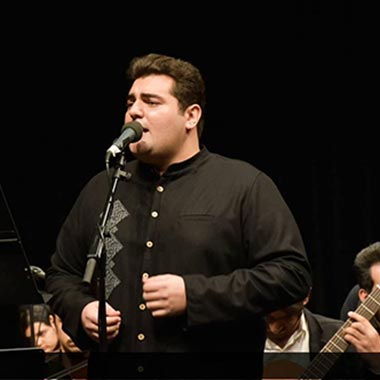
Poriya Zamani - Persian Singing
Tuition : 1,500,000 toman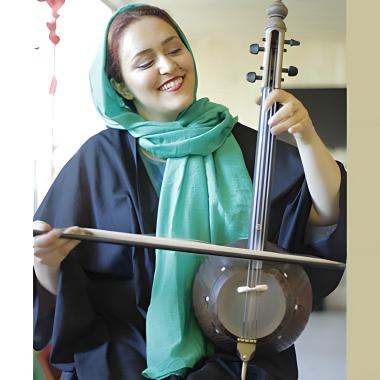
Delaram Zamani - Persian Singing
Tuition : call for price
Mohammad Malek - Persian Singing
Tuition : call for price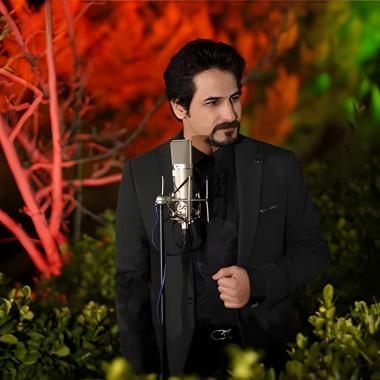
Sharif Tavakoli - Persian Singing
Tuition : call for price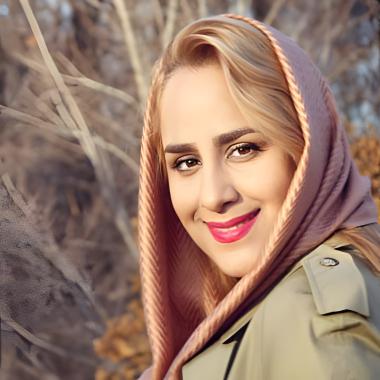
Soror Tavakoli - Persian Singing
Tuition : call for priceStudents Videos

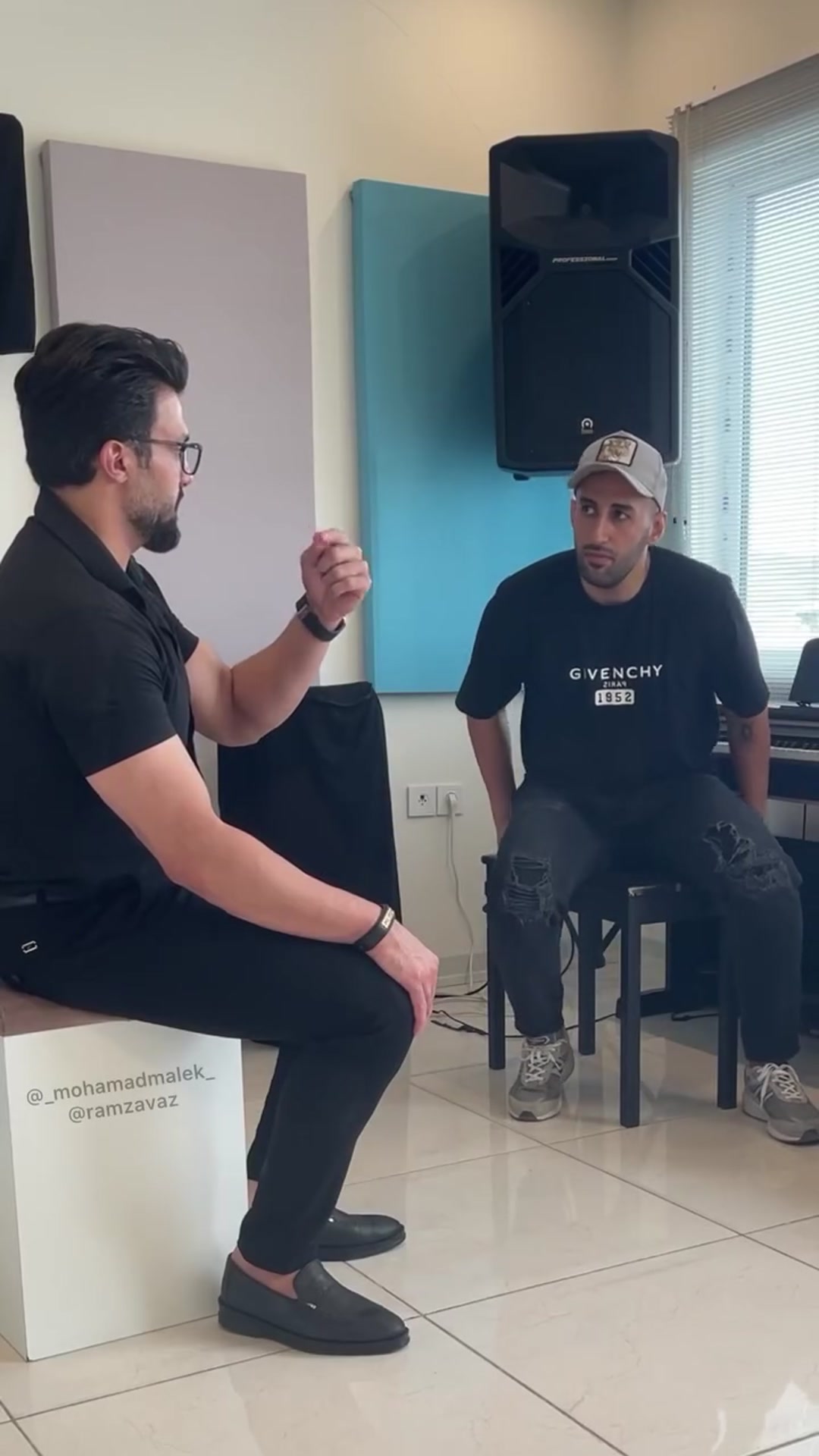
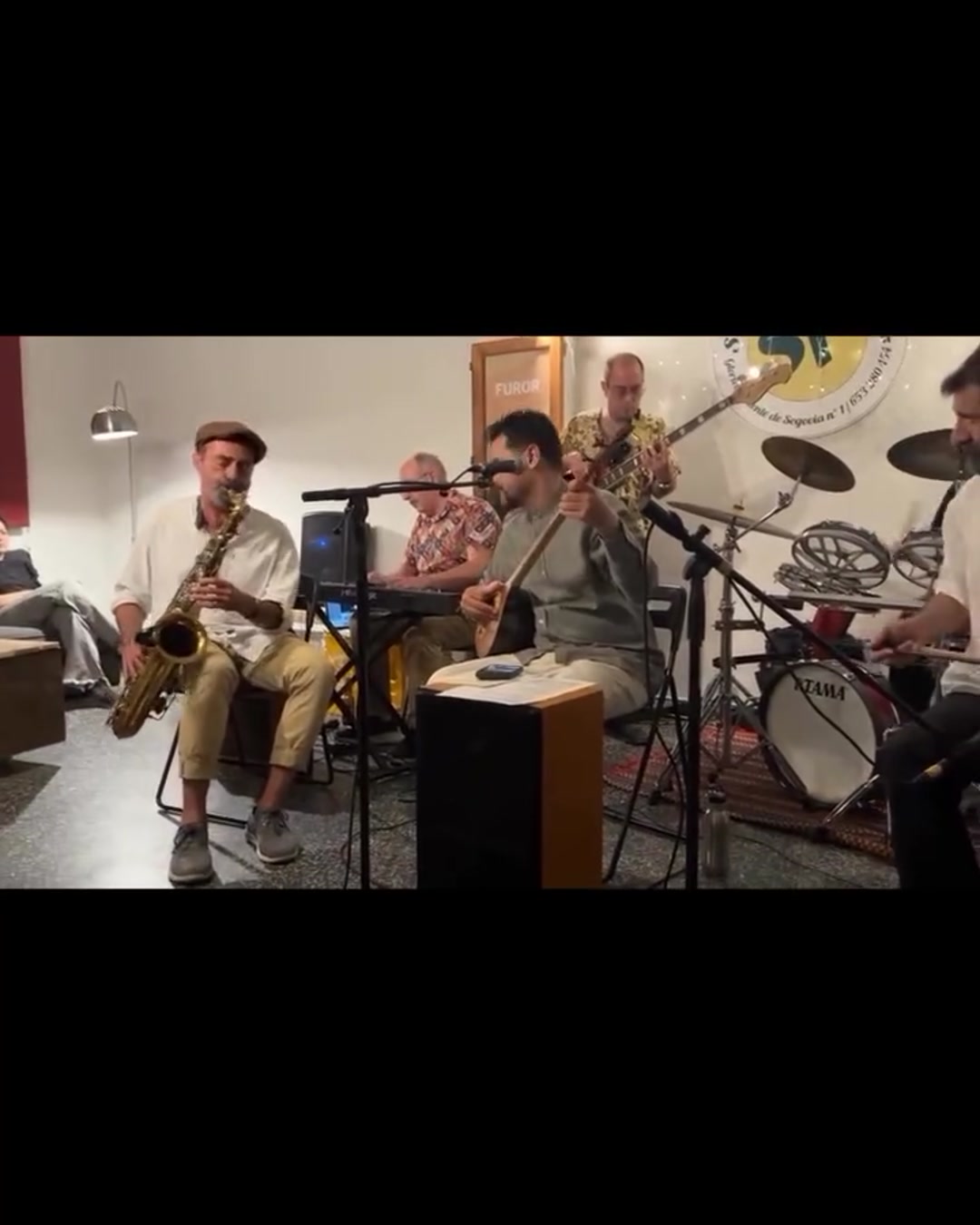

Persian Singing
Online Persian Traditional Singing Lessons – Discover the Art of Iranian Vocal Music
You love the sound of Persian traditional singing, but learning it can feel confusing at first.Maybe you can sing along with Iranian songs, but your pitch isn't always stable. Maybe you struggle with higher notes, don't know how to control your breath, or have no idea where to begin with Persian Radif, Dastgah, and Persian Avaz.
And simply copying recordings doesn't always help. Iranian traditional singing has its own language, and learning that language takes more than memorizing songs.
That's where online Persian traditional singing lessons can help.
Learn Iranian Traditional Vocal Music Step by Step
Iranian traditional vocal music is built around much more than a beautiful voice. It involves melody, phrasing, ornamentation, musical modes, improvisation, and a very particular way of expressing emotion.In your lessons, you can gradually work on:
Iranian traditional vocal technique
Persian Radif and its melodic structure
Dastgah and Persian music modes
Persian Avaz
Breath control
Pitch accuracy and vocal control
Vocal range
Traditional vocal ornamentation
Iranian traditional vocal improvisation
Learning and interpreting Persian songs
You don't have to understand everything from the beginning. The goal is to build your understanding as you sing.
What Makes Persian Traditional Singing Different?
One of the most beautiful parts of Persian singing is that the singer isn't always simply following a fixed melody from beginning to end.Persian Avaz gives the singer room to explore a melody, play with phrases, and respond creatively to the musical context. This is closely connected to Persian Radif, Dastgah, and the different Persian music modes.
Over time, you can begin to recognize these melodic patterns by ear instead of only thinking about them as theory.
That's also where Iranian traditional vocal improvisation becomes interesting. Improvisation isn't about randomly singing whatever comes to mind. It grows from understanding the melodic language and knowing how to move within it.
Improve Your Breath, Pitch and Vocal Range
A beautiful traditional voice still needs control.Breath control helps you manage longer phrases without rushing or losing stability. Pitch work helps you sing notes more accurately, while exercises for your vocal range can make different parts of your voice feel more comfortable.
Rather than forcing your voice to reach a note, you'll learn to understand how your voice works and gradually develop greater control.
From Learning Radif to Actually Singing
Learning Persian Radif can seem intimidating when you first encounter names such as Dastgah and different melodic phrases.But you don't need to memorize a huge amount of theory before making music.
Through listening, repetition, singing, and working with individual phrases, you can gradually connect the concepts of Persian Radif and Persian music modes to something you can actually hear and sing.
The theory starts making sense because you're experiencing it through your own voice.
What Can You Expect to Achieve?
With regular practice and guidance, you can work toward:Better Iranian traditional vocal technique
More accurate pitch and stronger vocal control
Better breath control and phrase management
A more comfortable vocal range
A clearer understanding of Persian Radif and Dastgah
Greater familiarity with Persian music modes
Better listening and melodic recognition
More natural Persian Avaz phrasing
A foundation for Iranian traditional vocal improvisation
More confidence when performing Persian traditional music
The result isn't just knowing more about Iranian music. It's being able to hear, understand, and express it through your own voice.
Don't Let Confusion Become Your Singing Habit
When you learn traditional singing completely on your own, it's easy to repeat things that don't actually work for your voice.You may push your voice to reach high notes, use too much tension, breathe at the wrong places, or imitate another singer without understanding why their technique works.
Eventually, these habits can become difficult to change.
Worse, you might start believing that you simply don't have the voice for Persian traditional singing.
Don't let a lack of guidance convince you that you can't sing. The right technique and a structured approach can make a much bigger difference than you might expect.
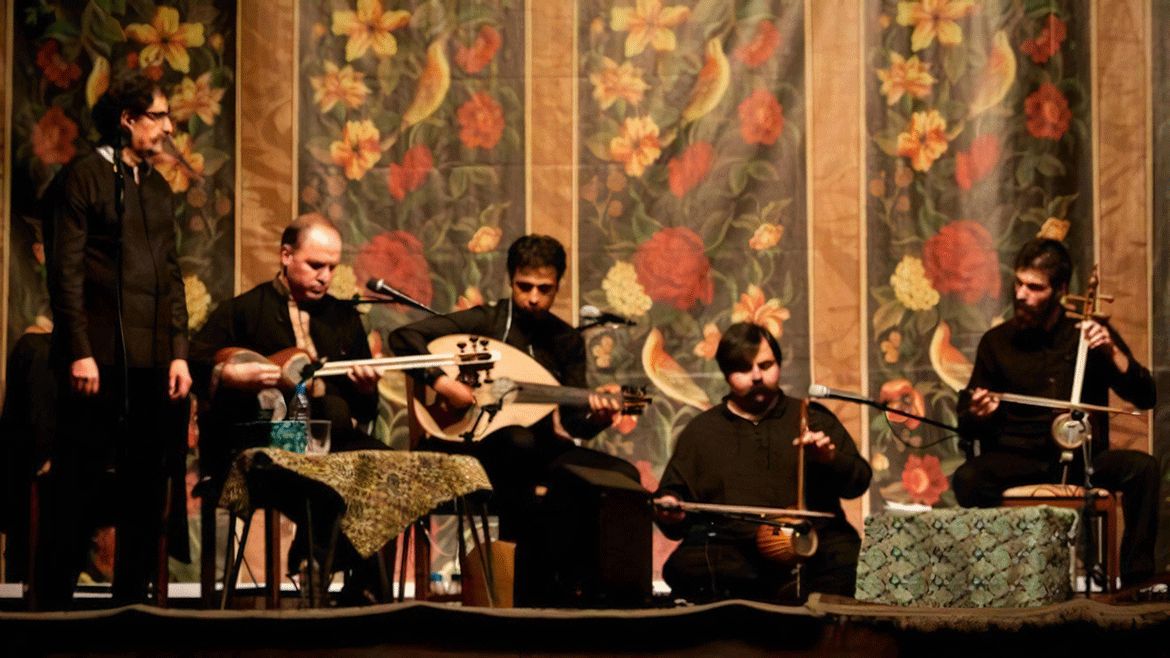
What Our Students Say
“I had always loved Persian traditional singing, but Radif and Dastgah seemed impossible to understand. Once I started learning them through actual singing, everything became much clearer.”“I used to lose my breath in longer phrases. Working on breath control changed the way I approach singing.”
“The lessons helped me stop simply copying singers. I finally understand how Persian Avaz works and how I can express it with my own voice.”
Note: Replace these sample testimonials with real student reviews before publishing.
Why Do Students in Iran and Around the World Choose Inavaz?
💰 Fair Pricing Based on Iranian StandardsOur lesson fees are based on rates in Iran. Even when paying in dollars or euros, the cost remains significantly lower than private music lessons in many other countries.
🌍 Learn From Anywhere in the World
Join private music lessons from anywhere in the world. All you need is an internet connection — no commuting, no geographical limitations.
👨🏫 Selected Teachers From Iran and Abroad
Learn from a combination of experienced teachers based in Iran and instructors living abroad, bringing together musical expertise and international teaching standards.
🎼 Fully Private & Personalized Lessons
Every lesson is tailored specifically to your:
Skill level
Age and learning goals
Musical style and preferences
🗣 Learn in Persian or English
Our lessons are suitable for:
Iranians living abroad
Bilingual students
Non-Iranian students interested in Iranian music
💳 International Payments in USD & EUR
Despite international payment restrictions, we provide options for paying in foreign currencies. Any additional cost for international payments is kept transparent and reasonable.
Ready to Discover Your Persian Voice?
You don't need to be an experienced singer to begin.Start with online Persian traditional singing lessons and build your skills gradually—from vocal control and breath work to Persian Radif, Dastgah, Persian Avaz, and traditional improvisation.
Your lessons can be adapted to your current level, vocal range, musical interests, and goals.
We'll look at your current vocal range, pitch control, breathing, experience with Iranian music, and your familiarity with Persian Radif and Dastgah. You'll get a clearer idea of where you are now and what you should work on next.
Don't wait until bad vocal habits become difficult to change.
Take the first step and discover what your voice can do with Persian traditional music.
Contact us for more information and register right now.
Traditional singing online classes are suitable for all levels from beginner to advanced. You can choose the right teacher based on your level of knowledge and ability, also see your improvement by following the tips and exercises that the teacher gives you.
In these classes, based on your level, Iranian goosheh and dastgah, Iranian ballads(tasnif), Iranian radif, along with techniques of vocal improvement and beautification of pieces are taught according to your level and voice.
No, you can start even without any singing experience. Online instructors will help you learn the correct vocal techniques.
Yes, some Iranian instructors are capable of teaching Persian singing in English, allowing you to take lessons in your preferred language.
Yes, online learning can be just as effective as in-person classes when structured properly. Instructors use interactive techniques to provide precise feedback, helping students refine their vocal skills. Additionally, you can benefit from instructional videos available on various platforms to enhance your learning
It is recommended to select instructors with significant experience in teaching Persian singing and a strong understanding of Persian music techniques and modes. Additionally, reviewing feedback from previous students can be helpful in making your decision.
t
Yes. The correct using of *tahrir* is one of the most important part of Iranian vocal training, and we work on this subject with the best experts and teachers.